Finding the Intersection
Mark Twain was quoted as saying, “If you don’t know where you’re going, any road will get you there.”
As leaders it is more difficult to engage in meaningful self-development if we don’t know what we’re after. Develop what? Why?
In my most recent blog, I shared the benefits of identifying our purpose, sharpening our focus and bringing alignment to our self-development process.
So how do we determine our purpose (or purposes—it’s OK to have more than one) as a leader? May I suggest that purpose is often found at the intersection of What I’m Passionate About Street and What I’m Good At Boulevard.
For example, I am passionate about helping leaders translate their vision into reality.
God is not cruel; He would not give us a purpose we were not capable of fulfilling. Thus, the next step in identifying our purpose is determining whether we have the aptitude as well as the desire for our purpose.
I emphasize aptitude (defined as a natural [or supernatural] ability to do something) because knowledge can be increased and experience obtained, but we are more or less born with aptitude. There are 5’9” players in the NBA even though basketball is a tall person’s game because of their aptitude (combined with hard work and skill development).
Going back to my own example, God has given me an aptitude for the gift of administration. Some in the secular arena might call it the gift of organization.
In my former company, I was asked to create a group responsible for developing a strategic plan (i.e. translating vision into reality) and integrating and aligning the activities of a 2,500-employee organization. Even though my background was in law and human resources, I was able to create and lead an organization that exceeded the expectations of our vice president. I didn’t have the experience, but I had the aptitude.
This combination of passion and aptitude helped me realize that my purpose as a leader (at least one of them) is to help organizations reach their destiny. And how has knowing this purpose contributed to my self-development efforts? For one thing, it helped me understand the value of obtaining a degree in human and organizational development at Azusa Pacific University—something I might not have done if I wasn’t clear about my purpose as a leader.
In my next entry, we will explore focus and alignment.
-

SSM May Worship Nights
Encounter the glory of God with the HRock School of Supernatural Ministry in the month of May! Free and open to everyone! -
Crown City Healing Center
Excited about supernatural healing? Announcing the Crown City Healing Center on May 2nd! -
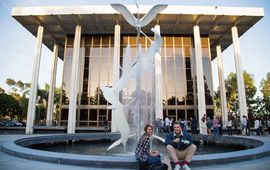
New Members Class
Is the Lord leading you to call HRock your church home? Join us in May and become a member! -
Mens Rock Gathering
A time of fellowship for the men of HRock at Coco's bakery – Saturday, May 2 -

Resurrected Life Ministries
New class beginning: inner healing discipleship to heal and restore identity in relationship with God – Monday, May 4 -

WLI: Purifying the Prophetic
There is nothing more powerful than releasing the Father's heart through prophecy! Join David and Jeanie Richardson - Thursday, May 14 -

HRock School of Supernatural Ministry
Now taking applications! Apply by June 1 for a $250 discount on tuition -

Life After Divorce Group
Journey into a new place of emotional wholeness that only God can give – Thursday, June 18th -
LeaderSHIFT Conference
The Lord is calling you higher—into your own unique calling. August 5-8, 2015. Register now!